Iris predicts which campaigns deserve your money, and which don't.
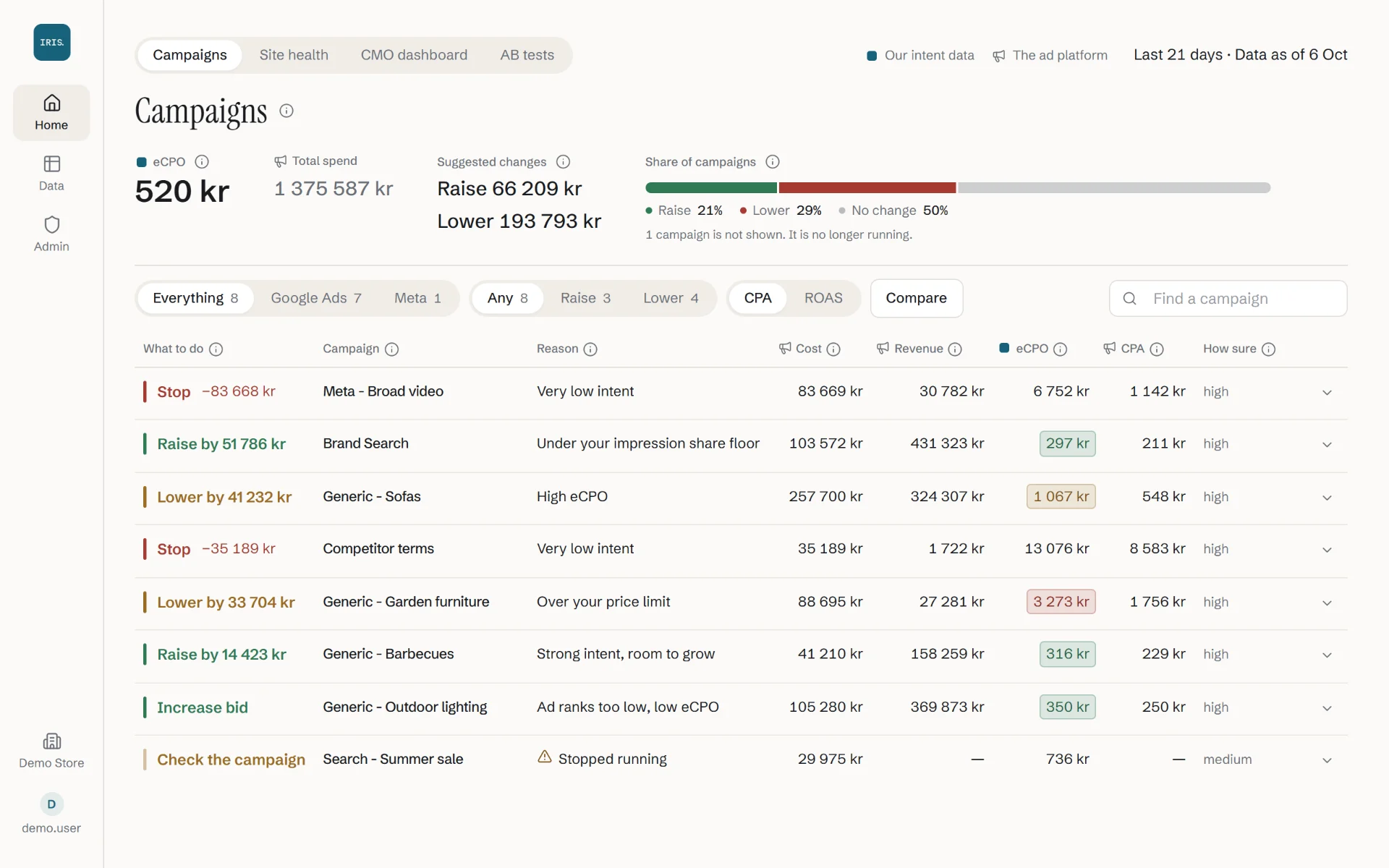
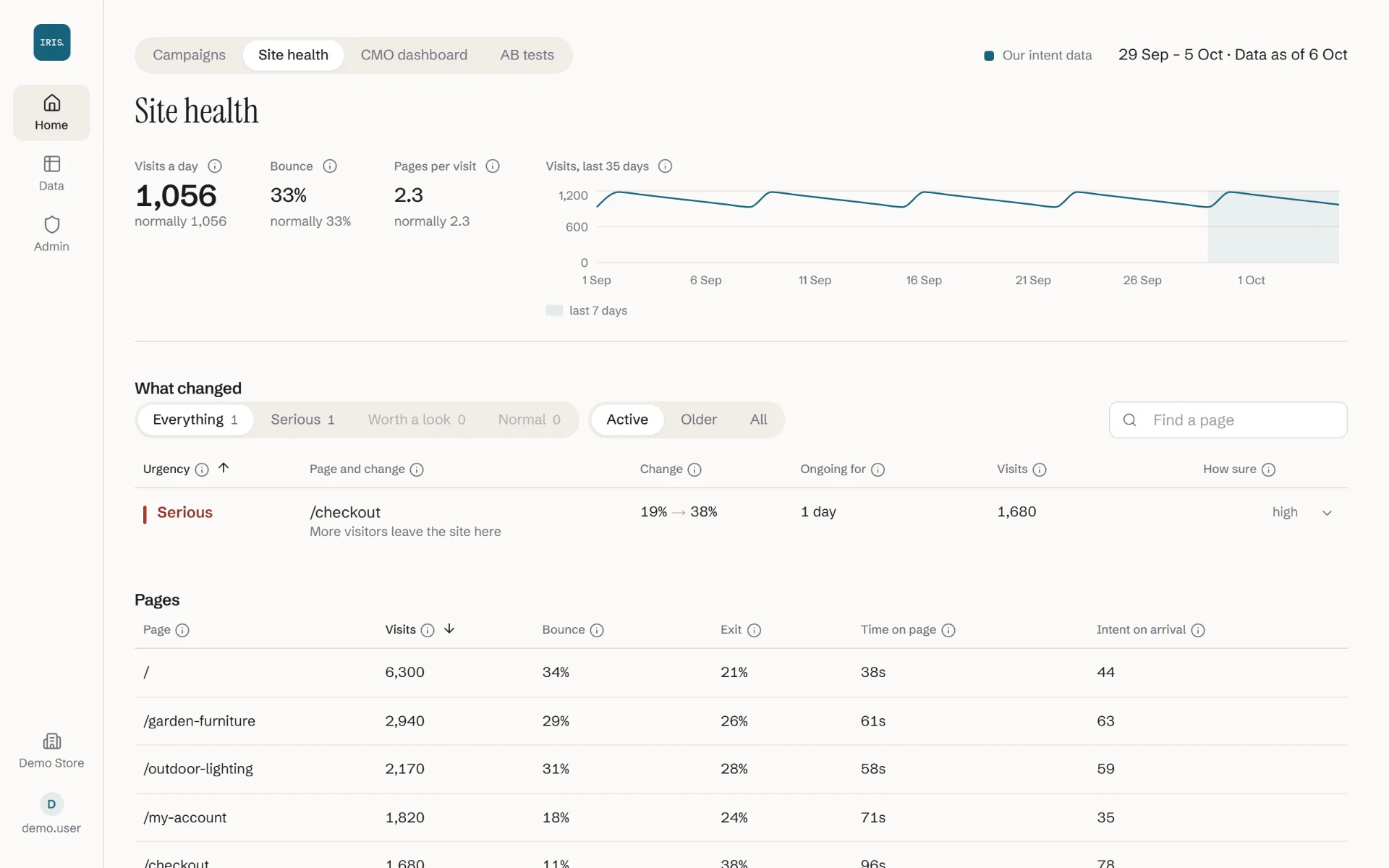
Iris scores how ready each visitor to your site is to buy. Then it gives every Google Ads and Meta campaign one decision a day.
Iris doesn't make the changes unless you tell it to.
Your ad platforms optimize for the wrong signal.
Clicks are not intent
Google and Meta see clicks, page views and the odd conversion. They cannot see who was about to buy.
Add-to-cart is not intent either
Visitors who add to cart and visitors who are ready to buy overlap by only 20 to 30%.
Existing customers look like buyers
Logged-in customers, support visits and people checking a bill look busy to the platforms. They are cost, not opportunity.
So the budget follows engagement, not intent.
One decision per campaign, every day.
Buyers keep coming, but the budget runs out before the day ends. Raise it.
Nothing has moved enough to act on. Leave it as is.
Intent is weak or falling, or each order costs too much. Spend less.
These visitors rarely buy. Stop paying for them.
When there is too little data, Iris says nothing instead of guessing.
Three parts that feed each other.
Each round buys better traffic than the last: better data in, better traffic out.
Iris Intent
Scores every visitA model trained on your own site scores every visit for how ready the visitor is to buy.
Iris Signal
Tells the platforms who buysSends your high intent visits to Google and Meta as a conversion they can bid on. Low intent and existing customers stay out.
Iris Scale
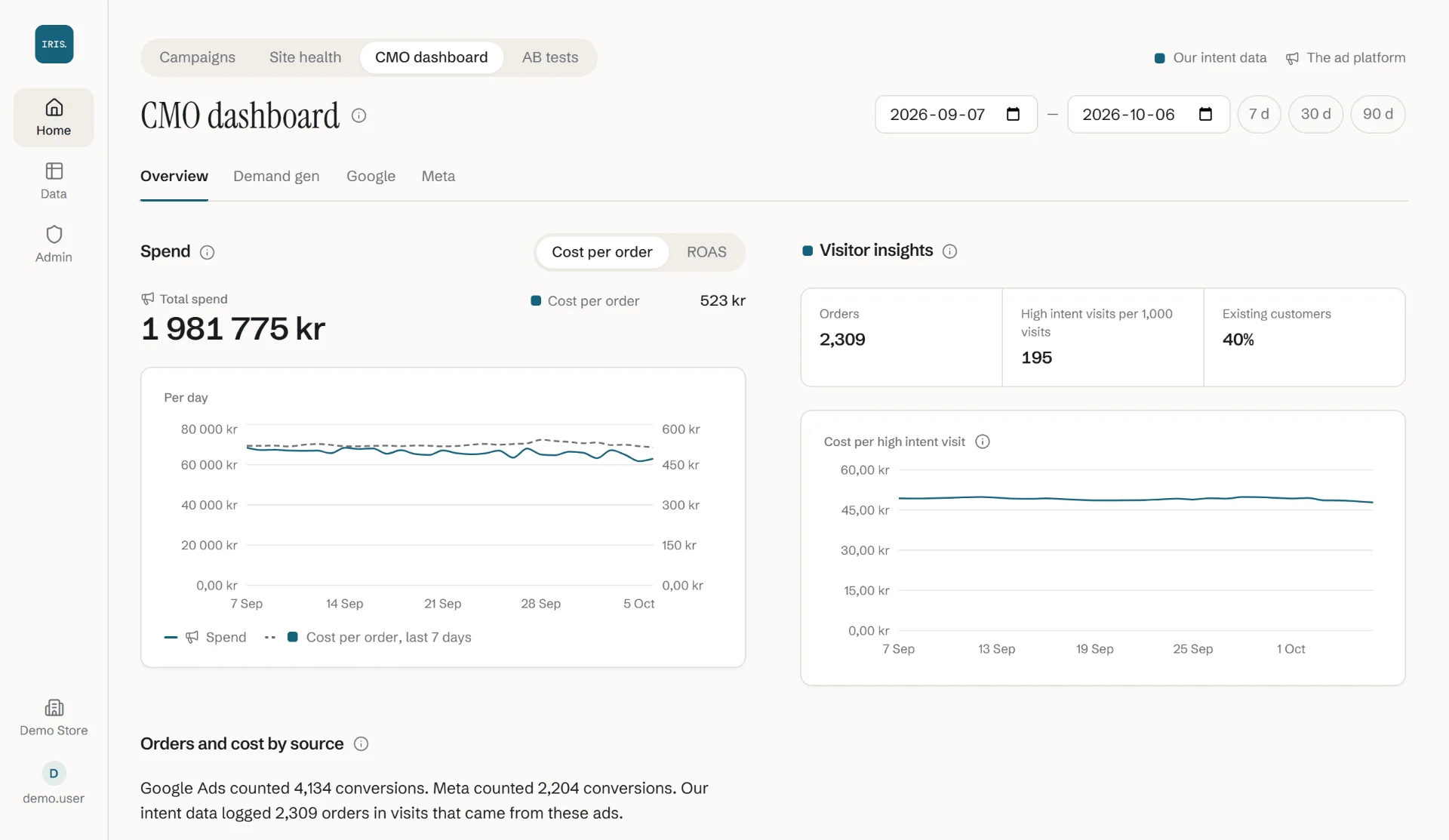
Moves the budgetReads your ad data and the intent data every night. Each campaign gets one decision, with the amount and the reason.
One account, three people who read it differently.
No ad platform tells you to spend less on it.
Clicks and cost do not show whether a visitor was going to buy. Iris looks at what visitors do on your own site, so it can tell you to cut.
22×
the normal cost per order, in the two weeks after Iris said stop
4×
the normal cost per order, where Iris said lower for weak intent or a high cost
Measured on one live account, July to August 2026, in weeks Iris had not seen when it gave the advice.
See all resultsValue first. Then you decide.
You see what Iris is worth on your own numbers before you commit to anything.
Add one tag and give access
One JavaScript tag on your site, plus read access to Google Analytics, Google Ads and Meta. It takes days.
We measure your potential
We train the model on your site and show you, in a workshop, what Iris would change and what it is worth.
Prove it with an AB test
Run Iris against your current setup for 4 to 6 weeks in your own accounts. Then say yes or no.
Built for companies that sell, sign or book online.
Set up by people, run by AI, checked by code.
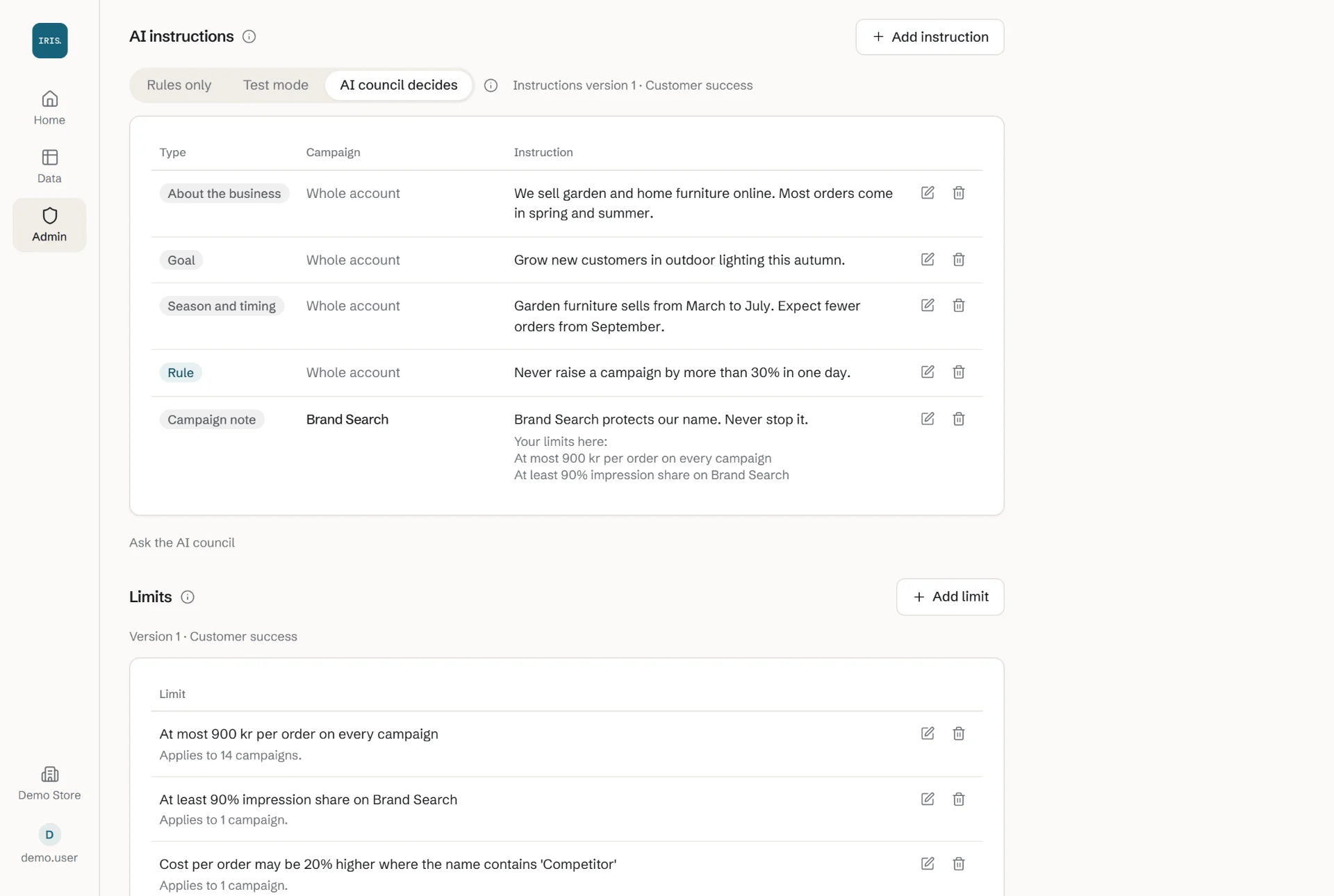
Our customer success team turns your goals into instructions and limits. An AI council reads them every night. Code checks every number before it reaches you.
See Iris on your own numbers.
Book a meeting. We show you Iris on a demo account. Then we measure your potential and prove the value in your own accounts, before you commit.
Already using Iris? Sign in